
This column was prepared by the Institute for Safe Medication Practices (ISMP), an Emergency Care Research Institute affiliate.
An outpatient pharmacy received an e-prescription for “traZODone HCl 50 mg oral tablet, take one to two tabs at bedtime” (Figure 1). Unfortunately, a pharmacy technician mistook the “l” in HCl for the number “1” and processed the e-prescription as traZODone 150 mg oral tablets. As a result, the patient took the incorrect dose for 90 days. The error was identified by another pharmacy technician during a refill process when they noticed a discrepancy in the dosage strength from previous prescriptions. The pharmacy promptly notified the patient and the prescriber, and no harm was reported. It is unclear why the e-prescription initially transmitted by the provider did not correctly populate in the pharmacy system, necessitating manual entry of the dosage strength by the technician.
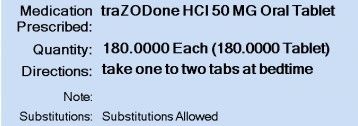
Figure 1. Image of the e-prescription for traZODone HCl 50 mg, which was manually entered as traZODone 150 mg after a pharmacy technician confused the “l” in HCl as the numeral “1.”
Drug names ending with the letter “l” have occasionally been involved in overdose incidents. This often occurs when there is insufficient space between the drug name and the strength (eg, propranolol20 mg), particularly in handwritten prescriptions. Therefore, it is crucial that even e-prescriptions display adequate spacing between the drug name and strength.
In the event described, the unnecessary inclusion of the chemical salt (ie, HCl) contributed to the error. The pharmacy contacted the prescriber’s informatics administrator, who indicated that the system could not be modified to remove HCl from the drug name. However, the recently updated ISMP Guidelines for Safe Electronic Communication of Medication Information recommend omitting the chemical salt when expressing a generic drug name unless multiple salts are available or the salt affects drug release (eg, metoprolol tartrate and metoprolol succinate). Since traZODone is only available as hydrochloride salt, it is advised that vendors exclude “HCl” from the drug name.
To minimize the need for manual transcription of e-prescriptions into pharmacy systems, hospitals, medical offices, and clinics must ensure e-prescriptions are constructed and transmitted according to standards set by organizations such as the National Council for Prescription Drug Programs and Surescripts. Pharmacies should routinely test and update their systems to ensure accurate processing and matching of e-prescription information.