Fraudulent drugs are a major safety issue affecting the United States medication supply chain, potentially exposing patients to dangerous substances. Although the US supply chain remains one of the safest in the world, falsified, unapproved, and unsafe drugs still make their way into legitimate pharmacies and medical facilities. In recent years, unregulated med spas have become particularly susceptible to fraudulent drugs, potentially endangering patients.
What Are Med Spas?
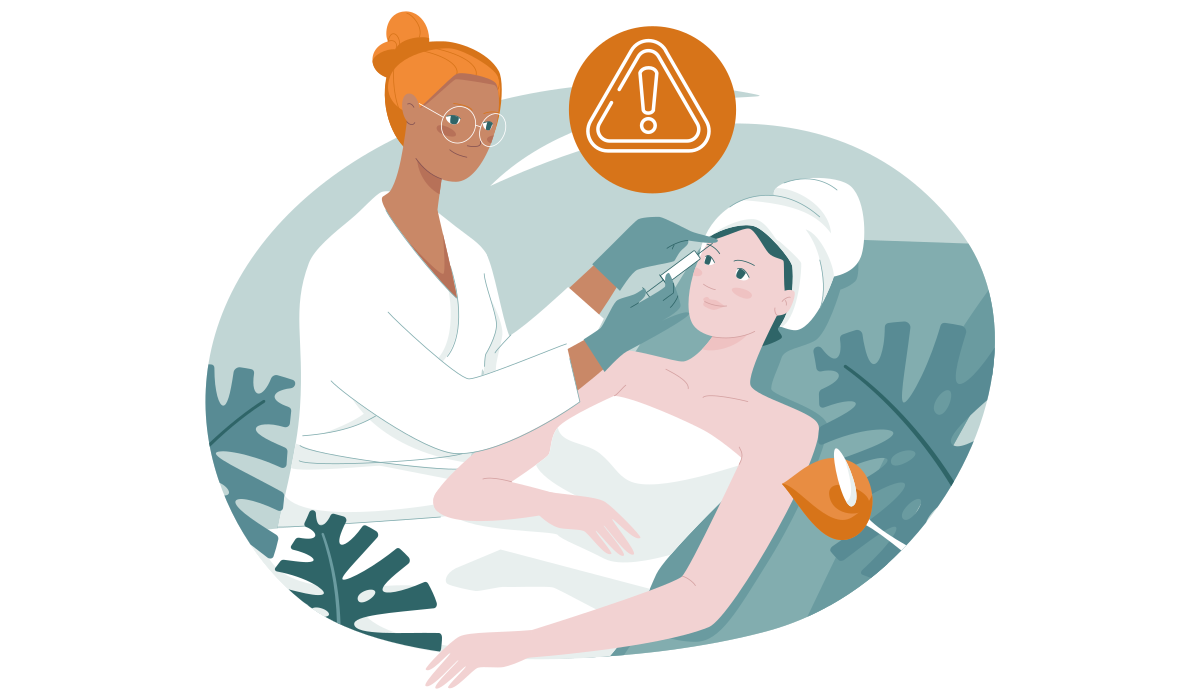
Medical spas, or “med spas” as they are commonly referred to, are facilities that provide spa-like dermatological treatments such as facials, chemical peels, and laser hair removal, while also providing prescription injection treatments like Botox, fillers, and more recently, GLP-1 agonists for weight management. Although the services at med spas frequently involve prescription medications and medical treatments, they often lack physicians on-site.
The regulation of med spas is fragmented, with the vast majority of states lacking a comprehensive statutory or regulatory framework. Only 13 states have issued guidance or created regulatory definitions related to med spas, and that includes the 4 states that require licensure and registration. Ohio is currently the only state that requires licensure of med spas with the board of pharmacy.
Unapproved Substances and Unlicensed Sellers
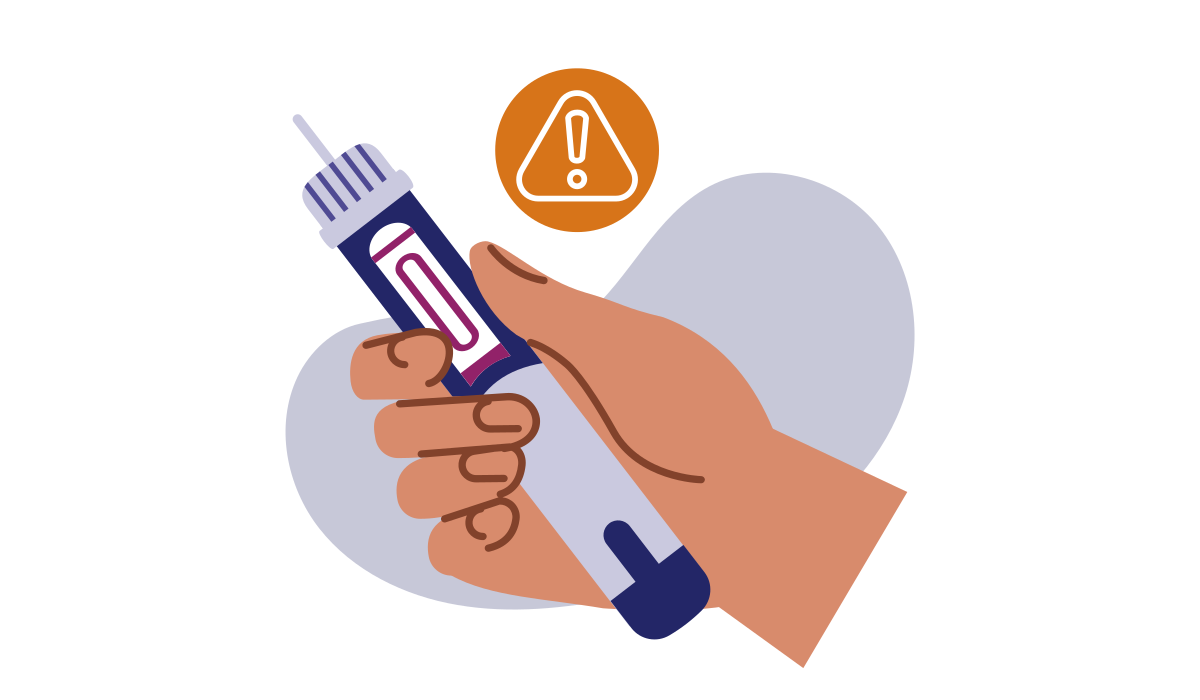
The fraudulent drugs we are discussing can be one of 2 things: unapproved substances or substances sold by unlicensed sellers. Unapproved substances are substances that have not been approved for sale by US Food and Drug Administration (FDA). This can include counterfeit drugs, illegally compounded drugs, or new substances that have not yet been tested. For example, regulators have seen versions of GLP-1s sold online that are meant for research purposes only and are not safe for human use. In some instances, unscrupulous compounding pharmacies or illegally operating non-pharmacy compounders may be purchasing these drugs intended only for research and then selling the compounded versions to med spas.
Alternatively, illegally operating, unlicensed sellers may be repackaging falsified drugs to look legitimate. For example, in 2024, a woman in Tennessee was accused of selling fake versions of GLP-1s and impersonating a licensed wholesaler. She was providing 2 med spas in her area with GLP-1s. In this case, she was repackaging drugs that should be sterile in a nonsterile environment. The drugs could contain unapproved substances, contaminated substances, or no active ingredients at all, possibly leading to illness, infection, and even death.
How Are Consumers Obtaining Illicit GLP-1s?
Although many med spas operate safely and compliantly, there are bad actors in the med spa space who are intentionally ordering falsified drugs and unapproved substances, like research-use-only GLP-1s. This makes med spas one pathway through which consumers are unintentionally obtaining illicit GLP-1s.
Consumers are also finding illicit GLP-1s listed online. Individuals use message board websites to discuss their purchases and let others know where to find the fake drugs online. Oftentimes, these consumers are aware that ordering the drugs online is illegal but don’t realize how dangerous the drugs might be.
How Are Illicit GLP-1s Entering the US?
Illicit GLP-1s are mainly entering the US in small, person-to-person packages or as individual active pharmaceutical ingredients (APIs) that are then illegally compounded in the states. Person-to-person “de minimis” (tax-free) packages are a common method for individuals to order illicit GLP-1s. As long as the product is under $800 USD, de minimis packages clear customs with minimal paperwork and inspection. Individuals can order online as easily as they would order foreign goods from marketplaces like Amazon and have the illicit GLP-1s sent directly to them.
Illegal compounders are ordering APIs that may be falsified and the sellers are shipping them via freight. Shipping illicit APIs via freight involves committing “code fraud,” meaning that they label the products incorrectly on the freight manifest. Falsified APIs are often labeled as antibiotics, as they are considered lower risk than other drugs.
Although FDA’s efforts protect the public from falsified drugs like GLP-1s, unfortunately, the agency does not have the resources to prevent all falsified medications from entering the US. 1.3 billion de minimis packages enter the US every year — that’s over 3.5 million per day. Between September 2023 and January 2025, 2,465 bulk API shipments arrived at the US border, 239 of which were GLP-1s. 195 of those were allowed to enter despite clear legal issues.

2,465
Bulk API shipments arrived at the border

239
Bulk GLP-1 shipments

195
Entered the US despite clear legal issues
September 2023 – January 2025
What To Do With Suspect Products
The Drug Supply Chain Security Act (DSCSA) makes the protocol around suspect products more straightforward. If you find suspect products in your pharmacy, you need to follow the steps to quarantine and investigate them under DSCSA, which usually includes notifying the manufacturer and asking the secondary wholesaler where they were purchased. If your investigation proves that the medicines are legitimate, they can be put back on the shelves. If your investigation results in finding out the drugs are falsified, you will need to report them. In one recent instance in Arkansas, fake GLP-1s were found and successfully reported through collaborative efforts among supply chain trading partners and law enforcement.
Learn more about GLP-1s in our on-demand webinar, Illicit and Counterfeit Drugs Threaten Americans in the GLP-1 Space, presented by Shabbir J. Imber Safdar, CFE, Executive Director, Partnership for Safe Medicines.
Make sure your patients understand the dangers of fake GLP-1s. Share Ohio board of pharmacy’s resource for med spa safety, and the Partnership for Safe Medicine’s patient resources to make sure they know to purchase medicines only from legitimate sources.