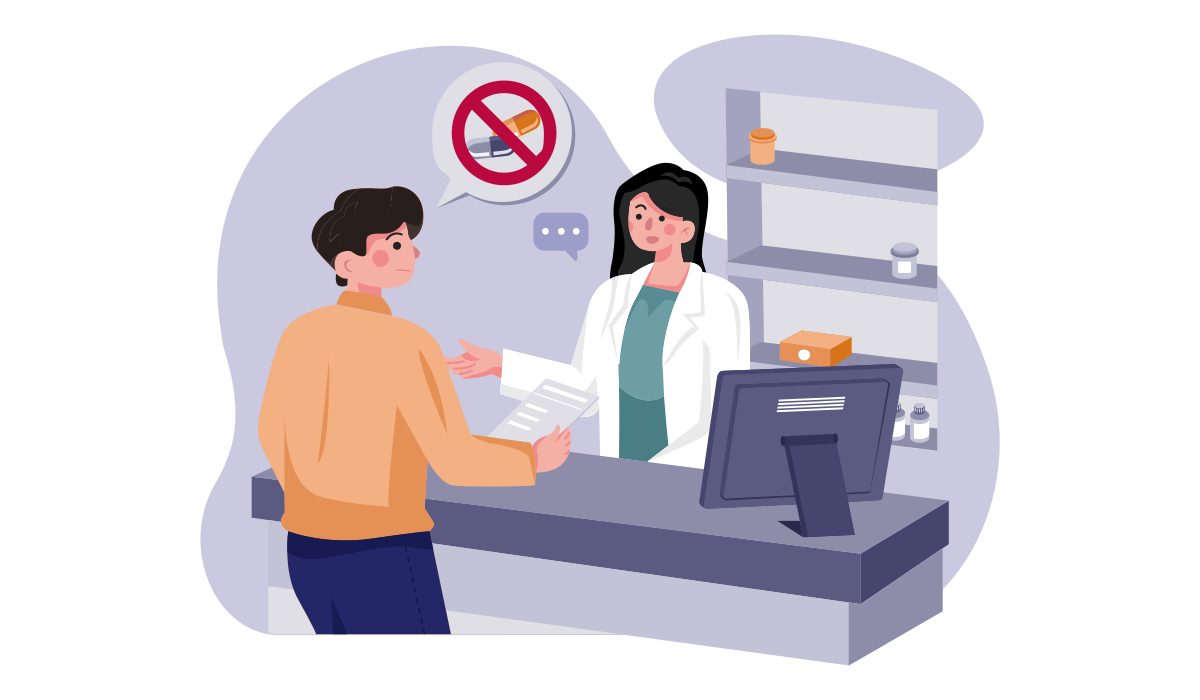

Artificial Intelligence (AI) is changing the everyday workflow of almost every industry, including pharmacy. AI is already used across many daily pharmacy operations for various purposes, including prescription verification, managing inventory, communicating with patients, and more. Under pharmacist oversight, AI can help enhance patient safety and tackle administrative tasks that often take up hours of a pharmacist’s time. Utilizing AI to manage heavy workloads could allow for more time to focus on patients.
AI will not replace pharmacists. Instead, it offers an opportunity to combat pharmacist burnout and ease work-related stress.
How Is AI Being Used in Pharmacy Today?
First, to discuss how AI is being used in pharmacy today, we need to differentiate it from other technological advances. There are a lot of technological advances that have taken place in the pharmacy industry in recent years, including robotics and interconnected software systems used in central fill systems and mail order pharmacy. These systems can fill, scan, package, and ship medication, but AI systems take this automation a step further – they are designed to learn from data, recognize patterns, and adapt over time.
In pharmacy practice, AI can analyze large datasets like patient medication histories, laboratory values, and clinical notes, and use that data to identify potential drug interactions, predict adherence risks, or recommend personalized therapy adjustments. Here are 4 areas in which pharmacy technology is being used today:
1. Medication Safety & Clinical Decision Support
AI plays a crucial role in enhancing medication safety by providing clinical decision support. Systems can screen for potential drug-drug interactions, scan for potential medication errors, generate allergy alerts, and optimize dosing based on an individual patient’s information.
2. Prescription Processing & Workflow Automation
AI also streamlines pharmacy operations by automating routine tasks. It can handle data entry, assist with prior authorization processes, and support smart verification systems to reduce human error. Additionally, AI can forecast inventory needs, ensuring medications are stocked appropriately and improving efficiency in both retail and hospital pharmacy settings.
3. Personalized Medicine
AI can enable a more personalized approach to patient care. By analyzing patient-specific information, AI can provide tailored therapy recommendations. These systems also help identify high-risk patients who may require closer monitoring or alternative treatment strategies, moving pharmacy practice closer to truly individualized medicine.
4. Patient Engagement & Communication
Finally, AI can support patient communication and medication adherence. Pharmacy chatbots or phone assistants can answer common questions, send refill reminders, provide adherence tracking tools, and more. AI powered chatbots and phone assistants can assist patients more effectively than previously used chat software with pre-programmed responses. This level of interaction can strengthen the overall patient experience.
Potential Risks and Concerns of AI in Pharmacy
Despite its many benefits, the use of AI in pharmacy also raises several important concerns. Data privacy and cybersecurity are significant concerns based on a recent study. AI systems rely on patient information that must be carefully protected from breaches or unauthorized access.
Algorithm bias is another challenge, since AI models trained on incomplete or unrepresentative data may produce inaccurate or unfair recommendations for certain patient populations. Regulatory oversight and consistent checks and balances can help protect patients from these potential risks.
Another potential risk is the overreliance on automation, where health care professionals may place too much trust in AI-generated outputs without applying appropriate clinical judgment. This is part of the reason pharmacist oversight remains very important for patient safety in AI workflows.
The Future of AI in Pharmacy
As AI continues to evolve, its role in pharmacy is expected to expand significantly. Emerging applications of AI in pharmacy includes predictive population health management, such as predicting disease risks, and helping pharmacists intervene earlier to improve community health outcomes. AI may play a growing role in telepharmacy by supporting remote patient consultations, facilitating medication management, and answering common medication questions. Finally, the integration of AI in wearable technology and remote monitoring devices could allow pharmacists to track patient health data such as heart rate or glucose levels, enabling more proactive and personalized care.
NABP is committed to providing support for the pharmacy community, including tools and guidance to move technology innovation forward. NABP will continue to monitor new technological advances through our Research & Innovation Institute. The Institute provides an environment to share, study, and evaluate relevant technologies, digital health concepts, and resources. NABP aims to help ensure that emerging technologies like AI are implemented responsibly while continuing to protect patient safety and support the evolving role of pharmacists.