
This column was prepared by the Institute for Safe Medication Practices (ISMP), an Emergency Care Research Institute affiliate.
Besremi® (ropeginterferon alfa-2b-njft) is used to treat adults with polycythemia vera, a chronic blood cancer and type of myeloproliferative neoplasm. It is available in a single-dose prefilled syringe containing 500 mcg/mL of drug. The syringe label has graduation markings in mcg (50 mcg increments, from 50 mcg to 500 mcg) (Figure 1). When starting Besremi, the patient’s dose will either be 100 mcg administered subcutaneously every two weeks, if they have not been taking hydroxyurea, or 50 mcg every two weeks, if they are transitioning from hydroxyurea. Doses can then be titrated until the hematological parameters are stabilized (hematocrit less than 45%, platelets less than 400 x 109/L, and leukocytes less than 10 x 109/L), up to a maximum dose of 500 mcg. It is important to note that if the prescribed dose is less than 500 mcg, the patient must discard any extra medication in the syringe prior to administration. Patients are maintained on the two-week dosing interval of Besremi until hematological stability is achieved for at least one year; after that, the dosing interval may be extended to every four weeks.
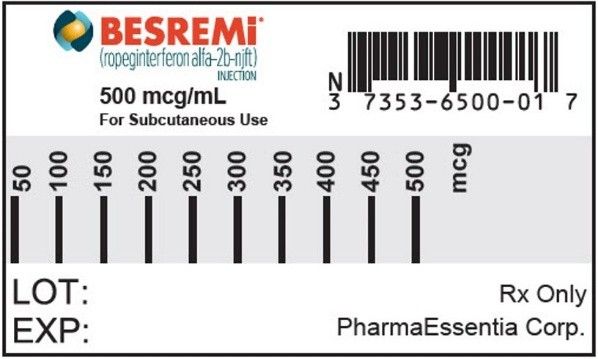
In a recent case, a nurse at an infusion center noticed a patient was having difficulty measuring the correct amount of drug for administration. As a result, the patient did not consistently administer the prescribed dose, despite prior training on self-administration. The nurse arranged for the patient to come back to the infusion center in a few days for repeat labs and to identify any potential adverse effects from the error.
The practitioner who reported this event expressed concern that other patients may also encounter difficulty using this medication correctly. Assessing whether a patient is an appropriate candidate for self-administration is essential. If a patient or caregiver is determined not to be an appropriate candidate for any reason, then Besremi should be administered by a health care professional.
When a patient begins self-administration, provide thorough education on storage, preparation, administration technique, and drug disposal. This education should include how to measure and discard any extra medication prior to administration. Use the teach-back method to assess the patient’s understanding. Reinforce education and reassess the patient’s understanding and technique each time the patient’s dose is changed.
As noted above, the prefilled syringe label is marked in terms of mcg doses. Ensure that patient instructions and prescription labels provide dosing instructions that match the unit of measure on the prefilled syringe. When initiating therapy, emphasize that dose adjustments may occur as frequently as every two weeks.
Patient monitoring is critical, especially during the titration phase. Closely assess for signs of dosing errors, including lack of therapeutic response or adverse effects. The prescribing information recommends performing complete blood counts (CBCs) regularly – every two weeks during the titration phase and every three to six months during the maintenance phase. Monitor CBCs more frequently if clinically indicated.